Tianle Chen
Creators face a delicate tradeoff: ads must be relevant enough to avoid alienating viewers, but not so relevant they’d feature them for free. Using LinusTechTips’ economics as a case study, we’ll explore the “sweet spot” that maximizes ad revenue while preserving long-term viewership.
How YouTubers Balance Ad Revenue and Viewer Retention
Disclaimer: These opinions do not reflect those of my employer and are mine alone.
Content creators face a paradox: while audiences prefer ad-free experiences, advertising revenue funds the content production that attracts those same audiences. This creates a delicate equilibrium where creators must carefully calibrate their monetization strategy.
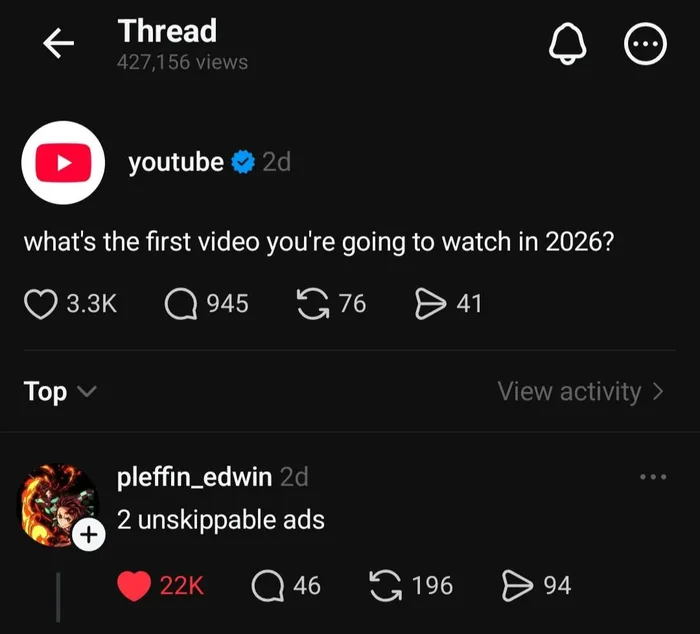
Understanding what influences the quantity and type of ads requires examining both the creator’s revenue needs and the viewer’s tolerance threshold. The answer lies in optimizing a narrow “sweet spot” between these competing pressures.
To understand the current state of online advertising, we’ll first examine how ad-supported content evolved over the past few decades, then dive into the specific economics of YouTube creators to reveal what drives their sponsorship decisions.
How ads took over the world
Traditional newspapers operated on a simple model: readers paid directly for content at newsstands. This direct payment model created a clear value exchange, but it also limited distribution to those willing and able to pay.

In the 2000s, “free” newspapers started appearing alongside paid ones. Commuters grabbed those instead, despite having substantially more ads—because it’s hard to beat “free.”
Key innovation: Revenue came from advertisers instead of readers, allowing these papers to scale viewership much faster than paid newspapers.
Online advertising
As PCs and mobile phones gained popularity, even free newspapers lost ground to websites operating on similar ad-supported models.
Early internet advertising revealed an important principle: ad quality and quantity signal content value. Low-quality sites with excessive pop-ups and misleading ads repelled users, while premium content providers maintained stricter ad standards to preserve their audience.
This dynamic established a crucial feedback loop: content quality correlates with ad restraint, which in turn preserves viewership and enables sustainable monetization.
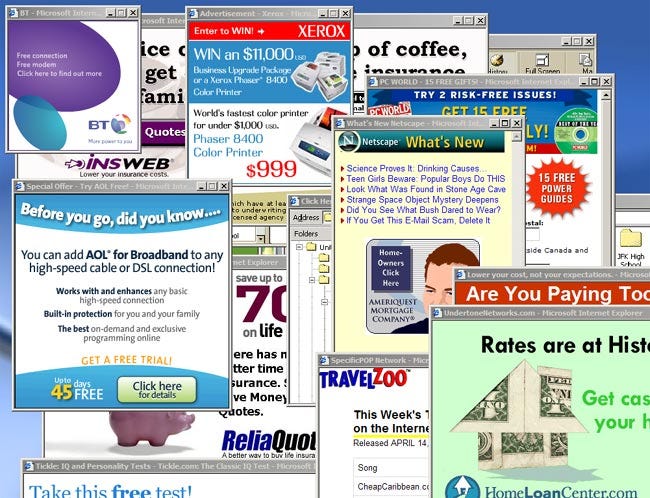
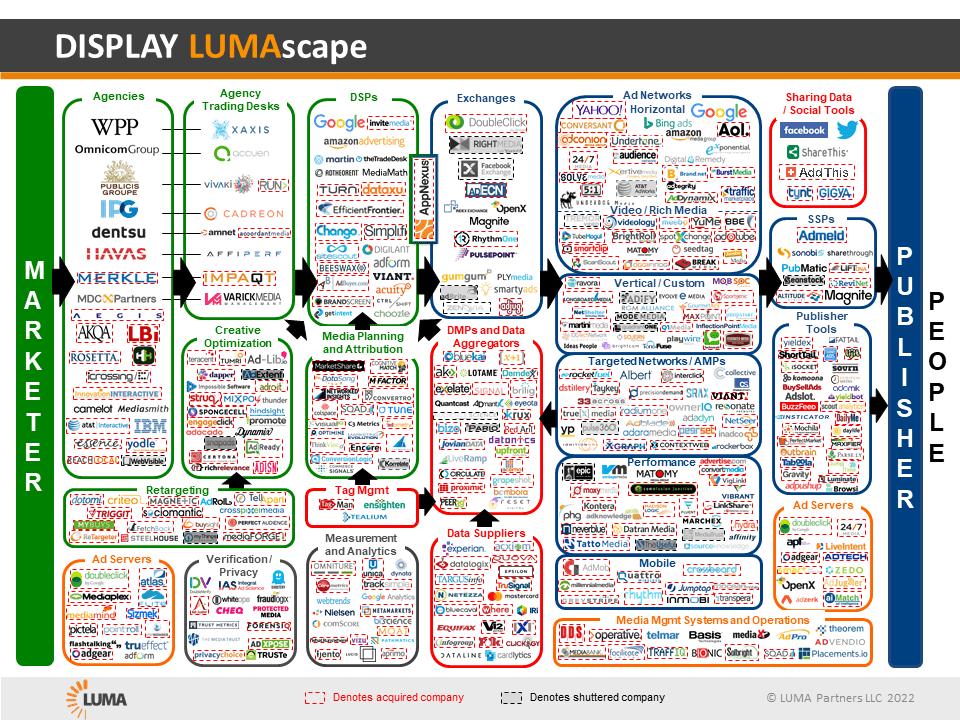
Even though online advertising is an interesting topic, it has become too complex to reason about, having undergone a major evolution from ad hoc partnerships to a whole slew of automated bidding and attribution systems over the last couple of decades.
Aside: Online advertising also enabled user tracking, promising marketers that FINALLY, they’ll be able to tell which half of their marketing spend was wasted. But realizing this promise always seemed to be one technical innovation away. We’ll talk about this in another post.
YouTuber ad economics, on the other hand, is a microcosm of the larger ad marketplace since they need to make the same decisions between retention (i.e., long-term viewers) and monetization (i.e., ad revenue).
YouTubers and sponsored content
On top of YouTube-injected ads, YouTubers also run sponsored content. These kinds of ads are useful for understanding what influences their decisions, as these trade-offs are made by the creators themselves, not by a black-box optimization like AdSense (which runs the YouTube-injected ads).
Does LinusTechTips have too many ads?
@LinusTechTips (i.e., LTT) is one of the top tech YouTubers who runs a multi-million dollar digital media company making money from these YouTube channels.
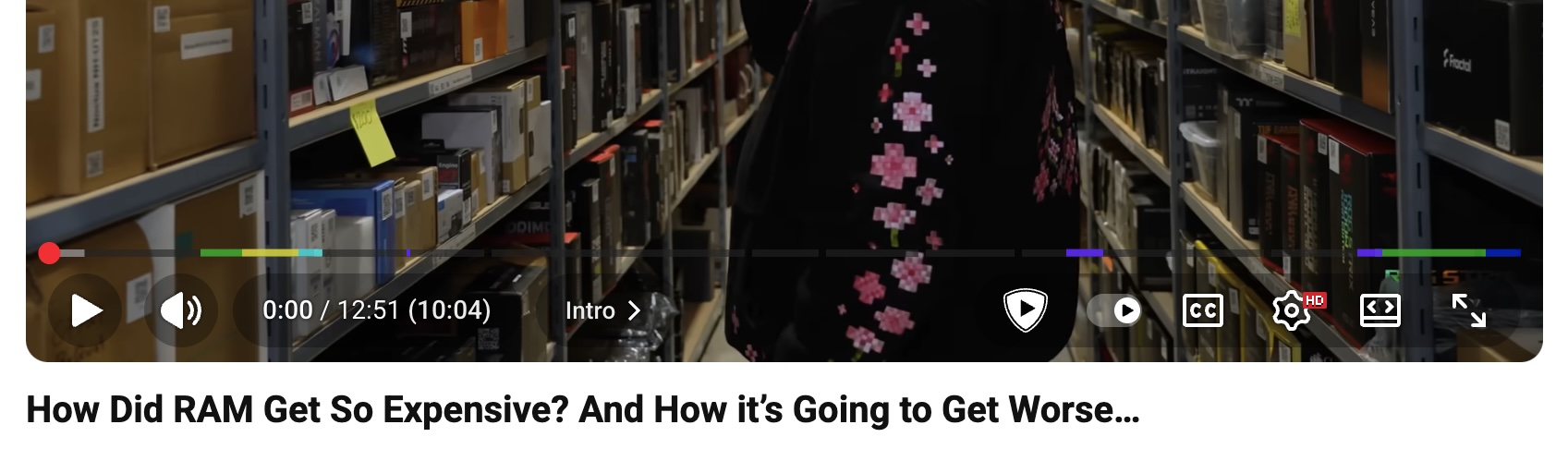
A recent rant on r/LinusTechTips complained about too many ads: 3 ad segments in a 13-minute video about RAM prices posted on Dec 30, 2025. The SponsorBlock view shows that those ads take up almost one-fifth of the total video length, excluding the typical two 15-30 second YouTube-injected ads.
How much is LTT earning per ad?
If we listened only to viewers’ feedback, content creators would have no food on the table. So what’s the breakdown, and how much are these ads contributing to @LinusTechTips’s top line? LTT doesn’t provide explicit figures, but they’ve dropped publicly available breadcrumbs:
Yearly revenue clues from a potential acquisition
- $100 million valuation quoted for potential acquisition in 2023
- Digital media valuations typically use a 10× yearly revenue multiple
- This suggests ~$10 million in yearly revenue
Revenue proportions breakdown from their video
- 55% - Merch (their own products)
- 21% - Sponsorships (third-party products/services)
- 14% - AdSense (YouTube-injected ads)
- 10% - Other
Back of the envelope maths using AdSense dollars
- Standard videos: $2k per million views
- Shorts: $100 per million views
- Channel total: 850 million views
- AdSense revenue: ~$1.5 million (14% of total)
- Total estimated yearly revenue: ~$10 million ✓
Let’s look at the ad spots again in the 13-minute video about RAM prices, which got 1.3 million views as of Jan 6, 2025, and assume (unrealistically) that their yearly revenue gets broken down proportionally by view counts:
- DBrand, their channel sponsor: Sponsorships (21% of revenue) ~$2k
- Clear LTT screwdrivers (merch, 55% of revenue) ~$10k
- Private Internet Access: Sponsorships (21% of revenue) ~$2k
- AdSense (14% of revenue) ~$1.3k
From LTT’s perspective, they can expect up to $15k in revenue from these ads in that single video, which absolutely explains why these ads are there. So why don’t they add more ads?
Long-term ad revenue depends on viewers
The growth of viewership is essential to the long-term viability of those ads on the YouTube channel. Higher viewership is directly correlated with the influence that LTT can resell to advertisers who may be interested in telling viewers about their newest product or service.
Too many ads would risk the channel losing viewership and thereby influence, resulting in fewer advertisers who want to have an opportunity to get featured in an LTT video. Revisiting the topic of 3 ad segments in a 12-minute video, we can see little evidence of a dampening in their long-term subscribership around the time of the video’s release on Dec 30, 2025, according to SocialBlade.com.
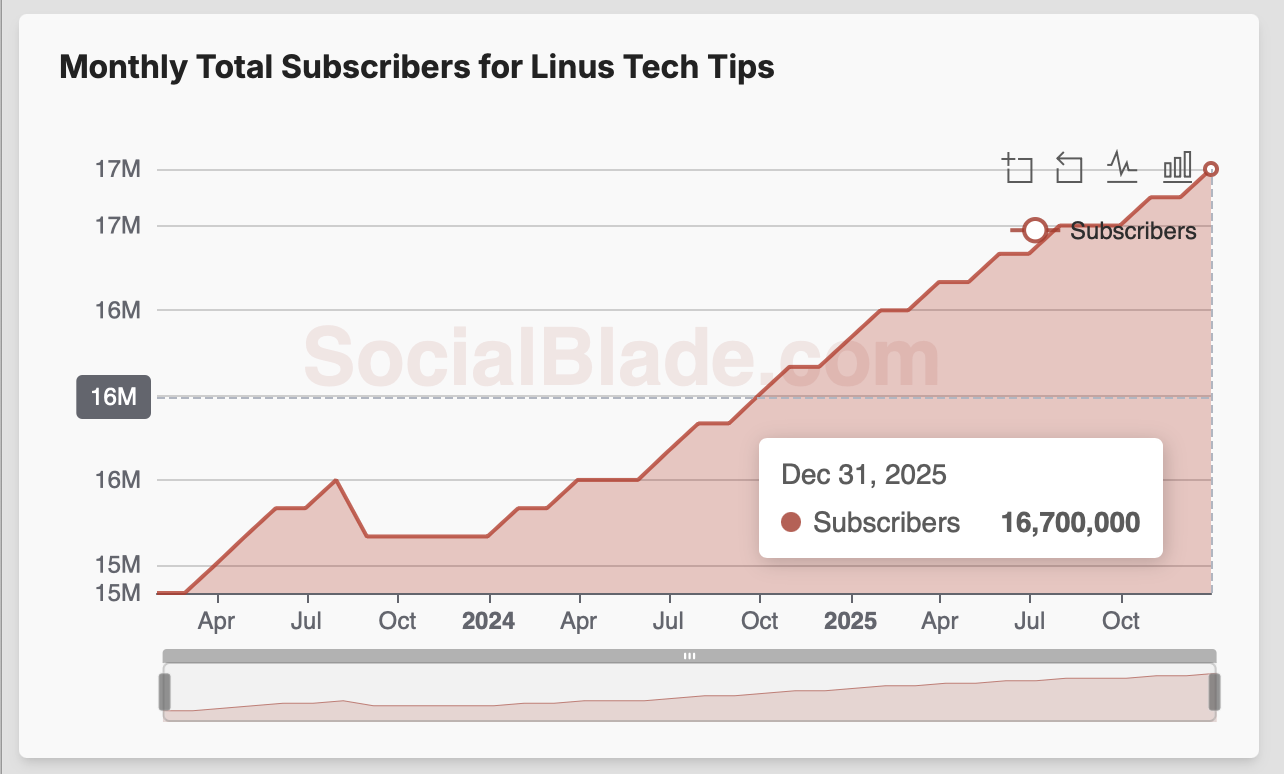
The only major dip in subscriber count was in July 2023, when they were mired in controversy due to an exposé by a competing YouTube channel, throwing their ethics into question and hurting viewer trust according to this CBC report. This endangered their ad revenue and long-term viability as a digital media company, prompting an apology video in which they promised a multitude of measures to win back viewer trust and credibility.
Aside: These counts could be lower if ad blockers like AdGuard (skips YouTube-injected ads) or SponsorBlock (skips sponsored segments) did not exist. When LTT pitches to advertisers, it would be in their interest to point to these counts without the above caveat.
But viewership is not ad revenue
Somewhat counterintuitively, viewership is more a measure of cost rather than revenue for YouTubers. High-quality content, while almost always correlated with high viewership, is certainly guaranteed to burn a hole in their pockets.
Luckily for us, LTT has another video detailing that an average video might take up to 60 hours of work to produce. Assuming their staff gets paid $20 per hour, this means a lower limit of $1,800 per video (good thing they seem to come out profitable!).

The hole needs to be balanced out by ad revenue if the YouTube channel has any hope of being able to continue making content in the long term. So how do marketers or advertisers decide how much money to throw at YouTube channels?
Drake equation for marketing budgets
If you’ve heard of the Drake equation, the answer is surprisingly simple:
Amount of marketing dollars ~ Number of Views × Probability of (Incremental) Purchase per View × Amount of Revenue per Purchase
However, similar to the Drake equation, the real complexity arises in the terms themselves:
Number of Views
- Hard to predict before release
- Proxies: subscriber count, past video performance
Probability of (Incremental) Purchase per View
- The likelihood of a purchase that wouldn’t have happened otherwise
- Most complex part of ad attribution (this is why YouTubers give you discount codes—to track this metric!), requiring some intense statistical knowledge. If you’re curious about what technical issues are involved here, see this video on Mixed Media Modelling by Google Ads.
Amount of Revenue per Purchase
- Higher-ticket items justify higher marketing budgets—this is why automotive YouTubers typically don’t need as many views to survive.
Example: Private Internet Access sponsoring the LTT RAM video:
- Views: 1.3 million
- Conversion rate: 0.1% use the discount code (1,300 purchases)
- Revenue per purchase: $40/year subscription
- Total incremental revenue: $52,000
- If they paid LTT $2,000 for the spot, that’s a 26× return on ad spend!
This is why YouTubers are incentivized to drive sales for advertisers—success means higher marketing budgets in the future.
Aside: For LTT, it’s in their interest to discourage viewers from using ad blockers (e.g., by claiming AdBlock is theft) even if they risk alienating their viewers. That’s because users who don’t see ads can’t meaningfully contribute to positive returns on marketing spend.
The game that creators play
Let’s revisit the initial discussion about 3 ad segments in a 12-minute video to put everything together into a cohesive strategy.
Let’s recall that the creator’s goal (with regard to ad load and ad types) is to:
- Maximize the return on marketing spend to incentivize larger marketing budgets in the future.
- Minimize the impact of these ads on long-term viewership.
The ad strategy that LTT went with is as follows:
- Strategic ad placement—clustering these ads after the “hook” (when interest in the main content is high) and after the main content increases user retention.
- Limiting ad load—20% ad load is still quite normal compared to traditional TV shows, where prime-time shows can contain up to 8 minutes of ads per half hour (i.e., ~25%) src
- Relevant and high-quality ads—ads that engage users are more likely to result in longer view lengths and reduce subscriber loss. On the flip side, ads that are less relevant to the audience can result in user frustration. For example, a Dyson-sponsored video is one of the most disliked.
The first two strategies are difficult to scale since they are constrained by the amount of content available to publish. Even if the creator has a massive backlog of content available and resources to produce them, the amount of user attention is typically limited (there’s only so much time in a day during which users watch YouTube).
Aside: The limited amount of attention per day is the reason why most online ad campaigns attempt to evenly pace the campaign spend (i.e., make sure that spend is spread evenly across campaign dates).
This leaves us with relevant and high-quality ads, which at first glance, seems to achieve both objectives at the same time.
But if an ad is so relevant that it’s not perceived as an ad, why would advertisers need to pay the creator? YouTube is a free and open platform, and businesses maintain their own channels and regularly upload ads to them. The key here is that advertisers may not need to pay for the most relevant ads (or third-party content) to be placed.
Aside: this problem can also be viewed as low “Probability of (Incremental) Purchase per View” from the perspective of deciding whether to bid for an ad spot on the video.
A sweet spot between willingness to pay and relevance
In this section, we’ll describe how this dynamic influences the types of ads you’ll see.
We can plot two lines on the horizontal axis of third-party content (3PC) relevance, differentiating it from ads since ads are typically paid for:
- Willingness of third-party (i.e., advertiser, 3P) to pay for placement of the 3PC—Low-relevance 3P content can often come from bad businesses or desperate marketers, neither of which is good for long-term viewership.
- Likelihood of content producer featuring the content without 3P having to pay—High-relevance 3P content is typically similar to organic content, and some creators would even pay to have access (instead of advertisers paying).
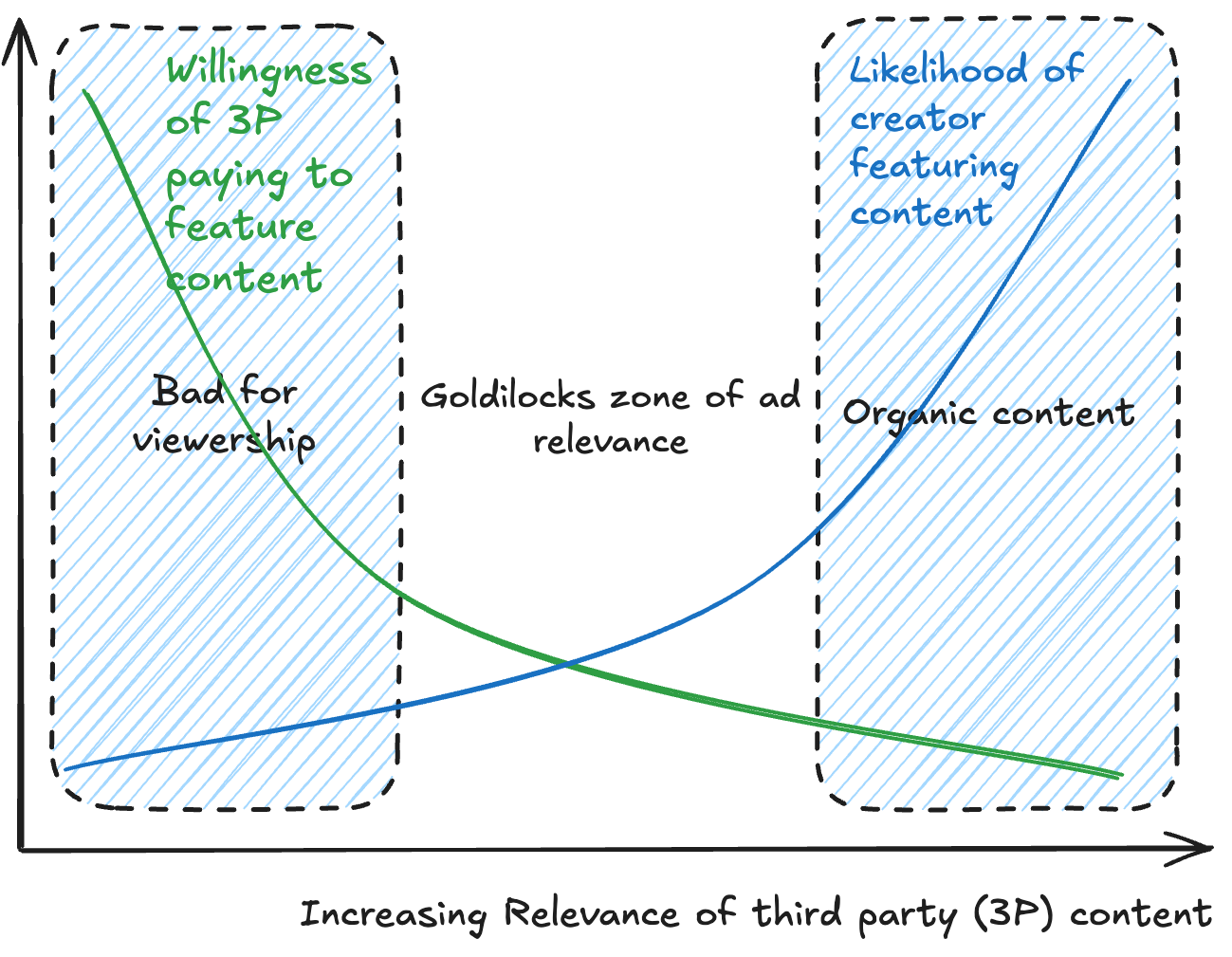
So the middle part (the sweet spot) is where ad revenue comes from, satisfying both conditions:
- Not so relevant that creators would want to feature the content anyway without the advertiser having to pay (i.e., Probability of (Incremental) Purchase per View is low). Examples include product reviews for channels featuring gear discussions, such as photography channels covering a new camera launch. Creators may even be willing to pay for access to these new products (e.g., some creators pay to attend the Consumer Electronics Show, where new and exciting tech gadgets may be released).
- Not so low-quality or irrelevant as to risk long-term viewership (e.g., scam content or low-quality products). Channels with scummy ads or poor ethics can also be exposed by channels such as @Coffeezilla, which is an interesting meta play. An indie tech YouTuber I enjoy, @BeccaFarsace, is upfront with her policy for sponsorships, such as “No paid reviews,” “Feeling comfortable with her audience spending money on featured products,” and “Not reviewing a device during a brand-sponsored trip,” to build trust with her audience and set expectations upfront with advertisers.
Maximizing the sweet spot
Given that creators do not have direct leverage over the willingness of advertisers to pay, they have to make the best use of the sweet spot identified above.
We’ll look at two examples below (with caveats).
Better-produced ads
Even if the content itself doesn’t align well with the audience, the production quality can improve the viewing experience enough to make it more watchable (than, say, just reading from the advertiser-provided script). Even obvious ads can go viral (e.g., Long long man went viral for a couple of months due to its absurdity).
Here’s an example from another LTT video incorporating an element from traditional TV ads: a jingle!
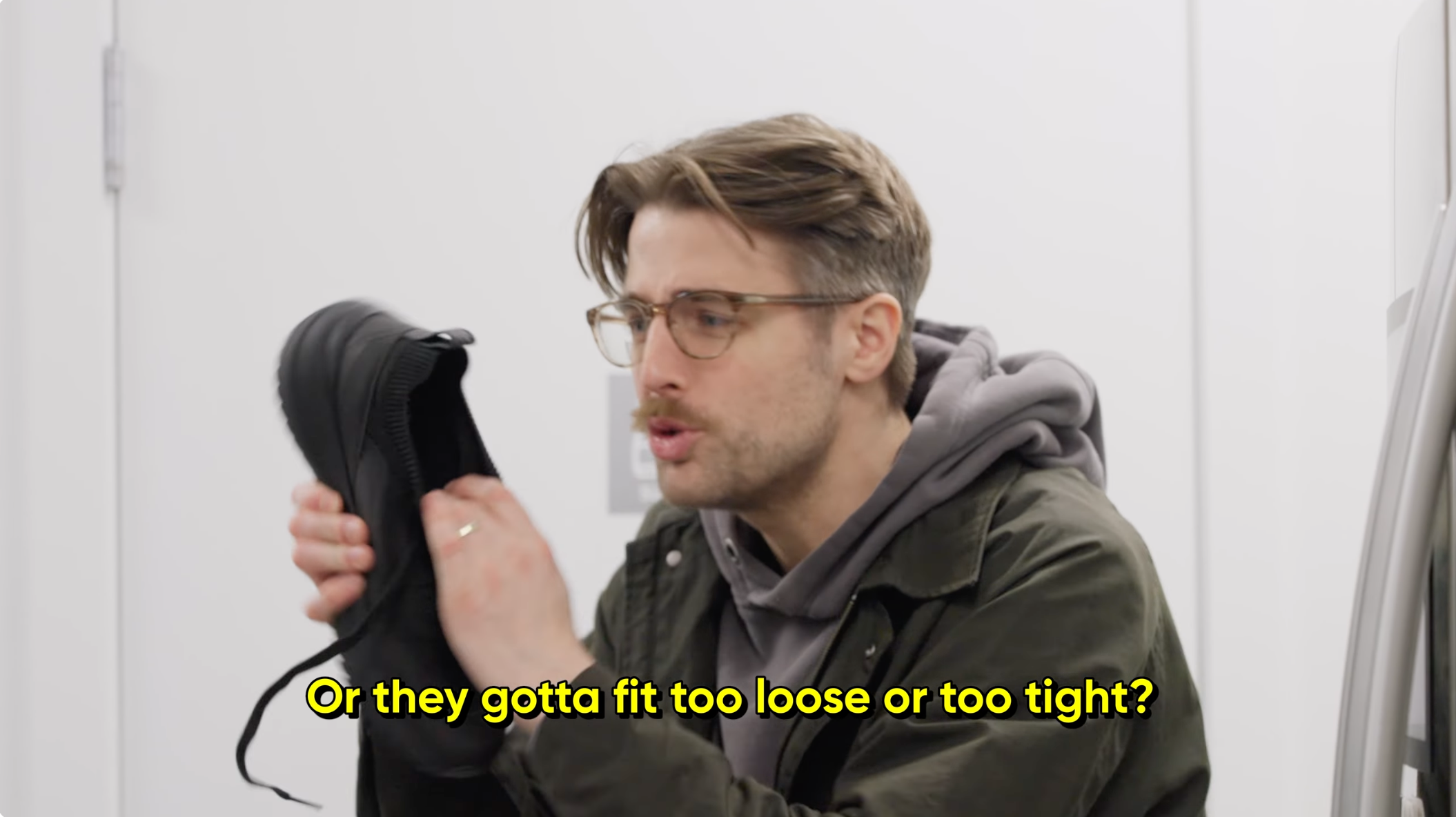
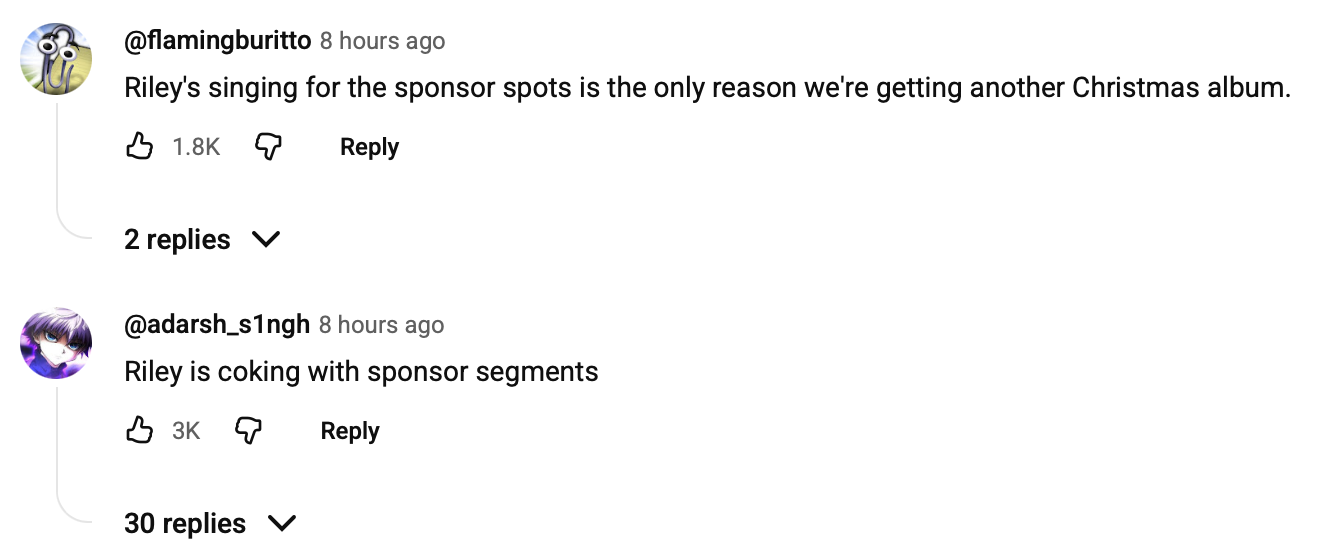
It seemed to be received quite positively as of when I’m writing this.
Aside: Better-produced ads have varying degrees of success in the modern ecosystem. The days of live TV are gone, along with unskippable ads. SponsorBlock, for example, helps viewers skip these sections altogether. However, for other content providers such as Netflix and Twitch, unskippable ads are still here, meaning that high-quality ads might still have a shot.
Audience-based relevance
Ads don’t have to be limited to the same topic as the main content. Featuring ads from related or even unrelated topics that appeal to the audience increases the pool of marketing dollars eligible to bid for the ad spot, increasing the creator’s revenue.
YouTube shares aggregate demographic data such as gender, age, broad geographical distribution, and (topic-based) interests of channel audiences, which makes it easier for creators to do this.
Let’s go back to the earlier video about RAM prices and revisit the sponsored ads, noting that LTT viewers are likely to be male, young, and interested in technology:
- DBrand—a tech accessories brand with features that appeal to enthusiasts such as the teardown series, featuring skins that expose the underlying circuit boards
- Clear LTT screwdrivers—their in-house screwdriver, specially designed for PC builders, because they’re “making the best screwdriver with PC building in mind”
- Private Internet Access—appeals to the privacy-conscious who do not want their internet activity tracked by “nefarious actors”
This example from LTT shows how they’re trying to appeal to a mostly male audience with another product that’s popular with males (i.e., War Thunder, a war simulation game).

Aside: This can lead to a downward spiral as creators desperate for ad dollars may feel pressured to introduce lower-relevance ads to fill the ad spots (possibly including scummy businesses), resulting in loss of viewership, which further reduces the ad spot prices they can command.
TL;DR
If you skipped to the end, here’s what I think you can take away:
- Creators must maximize ad revenue while preserving viewer trust for sustainable monetization.
- Ad revenue depends on the success of marketing dollars, which is ultimately determined by how much creators can influence viewers to contribute to the marketers’ revenue.
- High relevance ads seem to achieve both goals (i.e. maximizing return on marketing as well as retaining viewership), but advertisers may not be willing to pay for placement (i.e. creators may want to feature the content for free), leading most ads to be in a middle zone.
- As such, most ads feature two characteristics in terms of relevance, resulting in a sweet spot for ad revenue: not so low in relevance that long-term viewership is endangered, yet not so high in relevance that advertisers need not pay for it to be featured.
- The meta play here is to maximize the number of these sweet spot ads that can be featured (e.g. audience-based relevance) and minimize their impact on viewership retention (e.g. by better-produced ads).